An Early Shift from Wetland-Adjacent to Upland Farming in the Maya Lowlands
Departmental News
Posted: Oct 01, 2026 - 12:00pm
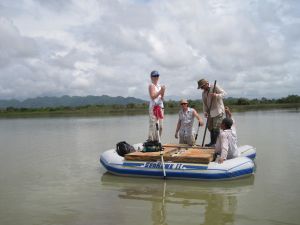
Dr. Keith Prufer is lead author on a recent article An Early Shift from Wetland-Adjacent to Upland Farming in the Maya Lowlands published in Communications: Earth and Environment (A Nature Portfolio Journal). Dr. Prufer, along with one of his co-authors, Nadia Neff (UNM Archaeology PhD Candidate) also presented their research Learning About Ancient Peoples Through Stable Isotope Analysison UNM's It's (Probably) Not Rocket Science Podcast.
Abstract
Maize is a seed grain of global social and economic importance. It has a mutualistic relationship with humans that evolved in parallel with the decisions of farmers who intensified its production. This occurred in the context of climate change, human selection for improved varieties, and increasing dietary importance. However, empirical documentation of human-maize dynamics is incomplete. Maize domestication was underway by 8900 BP in the neotropics and underwent selection over millennia while transitioning from a minor wetland-adjacent crop to a staple grain. We generated multiproxy isotopic, microbotanical, and paleoecological evidence that demonstrate a shift from extensive wetland-adjacent C4 plant cultivation by 6000 BP to upland C4 plant cultivation away from wetlands by 3500BP when early maize is being intensively cultivated. We link these processes to early land clearing, niche construction, and population growth following a dry interval as people reassessed risk in response to climate uncertainties. A subsequent steep decline in wetland-adjacent farming after 4000 BP corresponds with the establishment of upland farming settlements.
A new University of New Mexico co-led research paper on ancient food production in tropical Belize was published in Nature Communications Earth & Environment and provides evidence that people in the Maya speaking region were dedicated farmers thousands of years before the first large villages emerged.
Most notably, the team identified two major shifts in farming practices during the research.
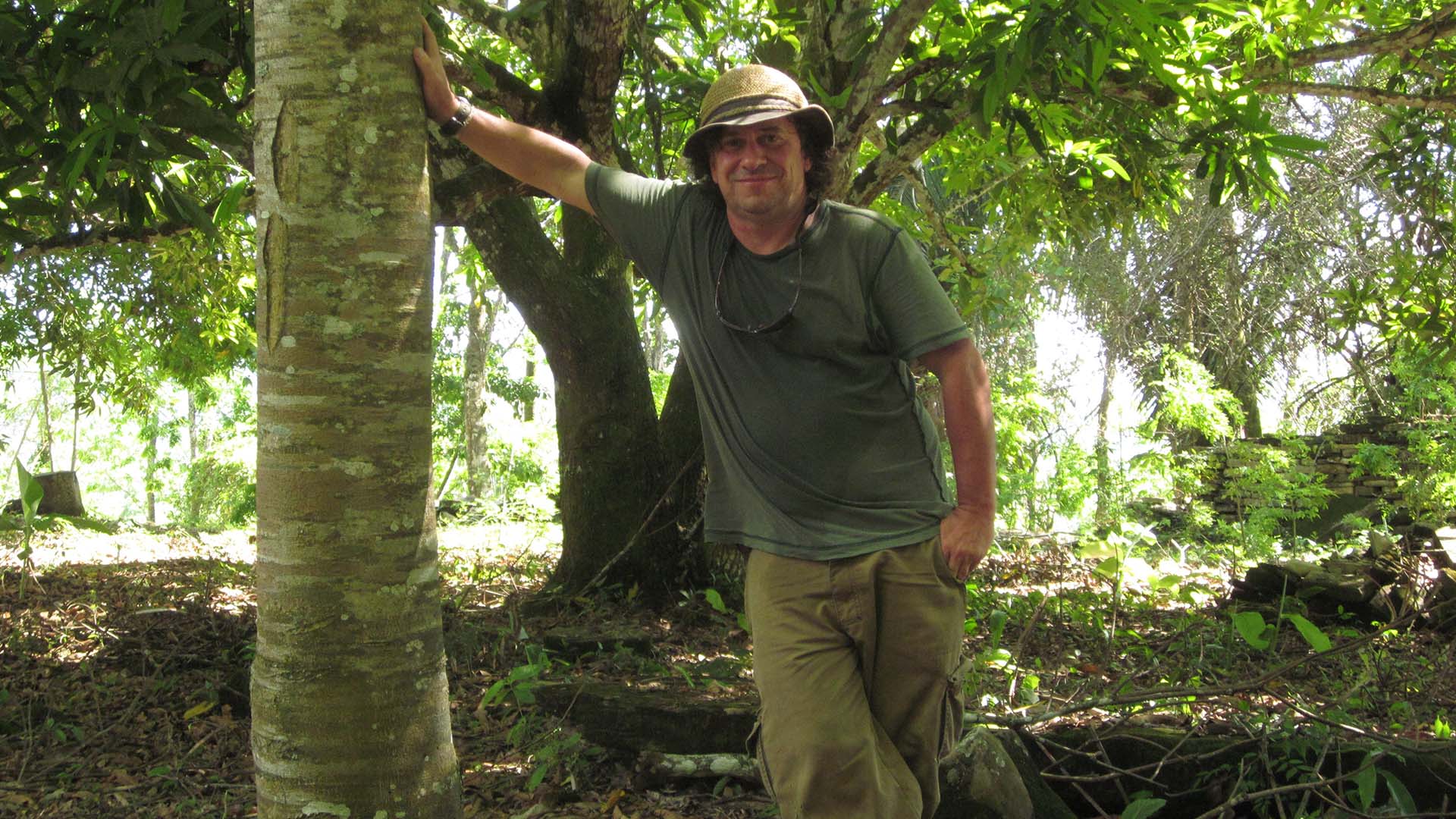
“The most significant discovery is that we were able to document that people were farming what was almost certainly maize by 6,000 years ago along the edges of wetlands where soil moisture is abundant, and that over time they changed practices to mitigate risks to their crops as populations grew and the environment changed,” said Keith Prufer, a UNM professor of Anthropology and director of UNM’s Human Ecology and Radiocarbon Lab in the Center for Stable Isotopes.
The study was co-led by Prufer and Megan Walsh, a professor in Central Washington University’s Department of Geography.
In addition to Prufer and Walsh, nine other researchers and authors contributed, many of whom are current or former UNM students, including Jose Mes. Mes is a local Mopan Maya-speaking farmer from Santa Cruz village, in the Maya Golden Landscape, where most people practice traditional farming methods called polyculture. Different crops, including maize, beans, and squash, are grown in the same fields, and the land is allowed to recover, or fallow, for several years before it is cultivated again. In this region, polyculture farming is a sustainable land use that has been practiced for thousands of years.
Mes was invaluable to the study, providing a local voice and perspective by sharing farming strategies, risks and how farmers evaluate each climate condition and situation to achieve the best crop outcomes. Naturally, farming carries risks, and the team has examined how early communities mitigated them, from climate shifts to growing dietary needs.

Their research has focused largely on the relationships between people and their environment, specifically farming locations for maize, which is a C4 plant, meaning it follows a photosynthetic process that conserves moisture and allows it to be detected in carbon isotopes in tropical soils even after thousands of years.
Prufer and his team have spent decades researching early farming shifts using interdisciplinary methods from archaeology, isotope ecology, and paleoecology, combined with conversations with farmers to learn how traditional ecological knowledge can be used to identify and mitigate risks associated with food production.
“This research study began in the early 2000s,” Prufer said. “The team has been working in Southern Belize in the Maya Golden Landscape, which is a region made up of 35 traditional Maya communities.”
During this time, the team worked with local farmers like Mes and gathered samples from wetlands and uplands near the ancient city of Uxbenká. Back in the United States, Prufer and his colleagues conducted chemical and microscopic analyses to identify and map changes in food production methods. They compared their data to early climate records in order to assess how changes in past rainfall patterns might have impacted decisions farmers made in response to climate change. Following a dry interval ending 4,000 years ago, farmers began growing C4 crops in upland areas, away from wetlands, and began to establish settlements that over time developed into much larger communities. When these local populations peaked after 2000 years ago, farming near wetlands appears to have been largely abandoned.
These same upland farm fields were then cultivated throughout the Maya Classic Period and are still farmed today with no loss in productivity. During that time, maize became socially and economically important to communities across the Maya-speaking world and is still a part of nearly every meal today.
“I think this research is important to know and share with our community, because maize is so central to people’s lives today, and we have uncovered its humble beginnings and a long and complicated history that people will find fascinating,” said Prufer.