Dr. Catherine Rhodes Publishes Living Language: An Introduction to Linguistic Anthropology, 4th Edition
Departmental News
Posted: Oct 07, 2026 - 12:00pm
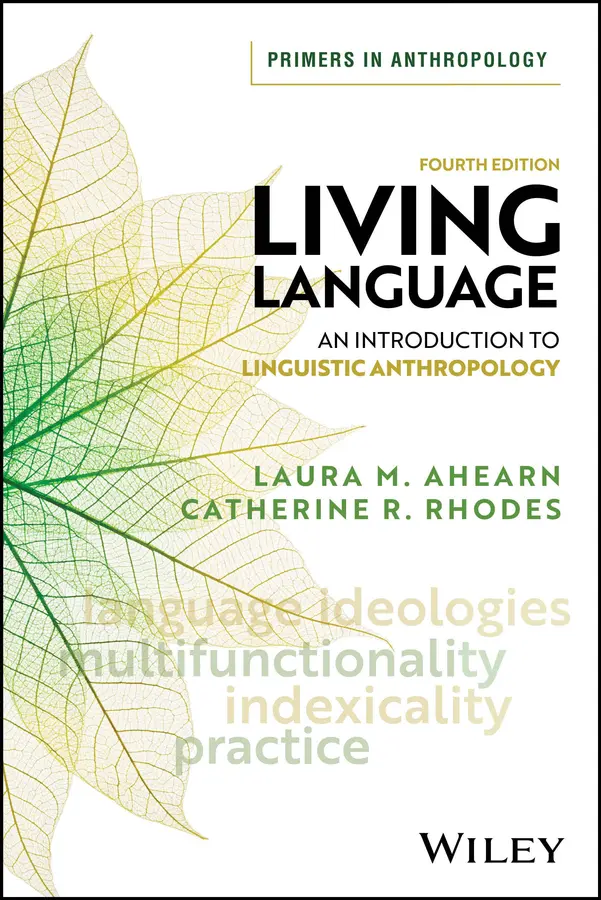
Dr. Catherine R. Rhodes and co-author Dr. Laura M. Ahearn recently completed Living Language: An Introduction to Linguistic Anthropology, 4th Edition, published by Wiley and available in November 2026.
Now in its Fourth Edition, Living Language: An Introduction to Linguistic Anthropology continues to ground students in how language both shapes and is shaped by social contexts, cultural meanings, and power dynamics. Fully updated throughout, this fourth edition covers both theory and real-world interaction, frontloading with a robust conceptual framework and equipping readers to interpret the chapters that follow.
New to this edition are discussions of AI in relation to literacy, updated coverage of transgender language research and pronouns, and a perspectival shift from language endangerment to language shift grounded in Native and Indigenous linguistic anthropologists’ perspectives. The text now explicitly addresses scale as a concept and highlights differences between Internet and cellular-based communication.
This insightful and indispensable book offers:
- Sign language scholarship integrated throughout the entire text rather than confined to a single chapter, reflecting current disciplinary approaches
- Cartoons, data tables, and relatable examples of actual language use illustrating linguistic anthropology's relevance in a globalized world
- A unified theoretical framework rooted in social theory covering language ideologies, multifunctionality, practice, and indexicality across chapters
- An accessible yet rigorous presentation that treats language as a non-neutral form of social action without oversimplifying core concepts
- A new appendix providing examples of classroom activities that can help instructors teach and students explore the key concepts of the book.
Living Language is ideal for undergraduate and graduate courses in linguistic anthropology, language and culture, and language and society, as well as related courses in sociolinguistics, sociology, education, and communication. Its accessible yet theoretically grounded approach enables students to analyze language as social action across diverse cultural contexts.